Ceramic Tableware Explained: What Wholesale Buyers Should Know
ceramic dinnerware sets ceramic tableware sets ceramic crockery sets
Ceramic is the most widely used material in tableware — and also one of the most misunderstood terms in sourcing. Strictly speaking, "ceramic" is a family of materials made from clay and hardened by heat. Stoneware, earthenware, porcelain and bone china all belong to this family, each with its own firing temperature, density and price point. If you buy dinnerware, mugs or crockery for retail, hospitality or promotional programs, understanding what "ceramic" means in practice will help you compare quotations and choose the right body for your market.
What ceramic tableware is made of
Ceramic tableware starts as a mixture of natural clays, kaolin, feldspar and quartz. The shaped pieces are dried, fired in a kiln, glazed and fired again. Two variables decide most of the final quality:
- Firing temperature. Low-fired bodies (earthenware) mature below roughly 1,150°C and stay porous. High-fired bodies (stoneware and porcelain) are fired at 1,200–1,400°C, which vitrifies the body — it becomes dense, strong and almost non-absorbent.
- Glaze and decoration. The glaze seals the surface, adds color and gloss, and determines food-contact performance. Underglaze, in-glaze and decal decoration behave differently in dishwashers and microwaves, so the decoration method belongs in every specification sheet.
Key properties buyers care about
- Water absorption. High-fired ceramic absorbs less than 0.5–3% water depending on the body, which means better hygiene and stain resistance than porous ware.
- Strength. Vitrified bodies resist chipping better than low-fired ware, an important factor for hotel and restaurant programs where replacement cost matters.
- Heat behaviour. Ceramic is microwave and oven friendly within normal serving ranges, but sudden temperature shocks can crack any clay body — a point worth printing in your care instructions.
- Food safety. A properly formulated, fully matured glaze is stable and food-safe. Buyers supplying the EU or US usually ask for lead and cadmium release test reports; make this a standard line in your purchase order.
Where ceramic fits in a product range
Ceramic covers the broad middle of the market. It suits:
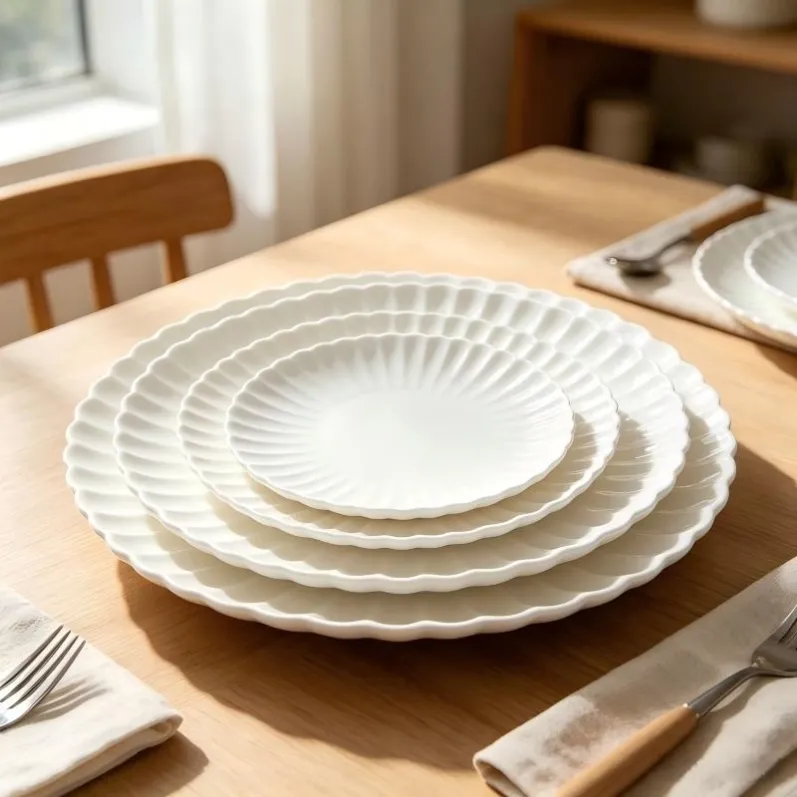
- Everyday dinnerware sets for retail and e-commerce
- Hotel, restaurant and café tableware that must survive commercial dishwashers
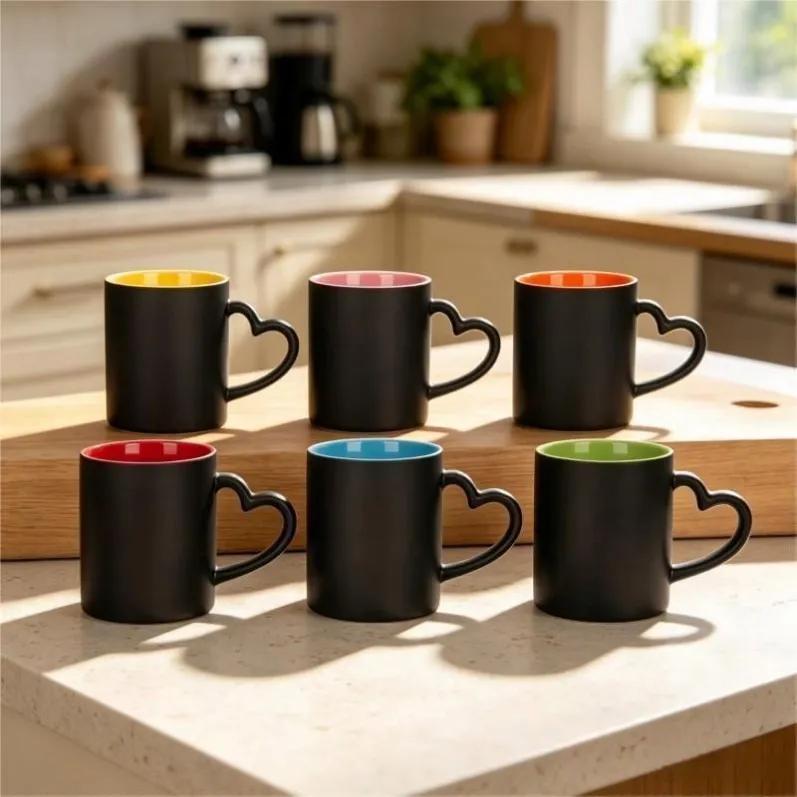
- Promotional and seasonal mugs, where custom colors and logos matter more than ultra-premium positioning
- Home decor crafts, ornaments and flower vases that share the same kilns and glazes
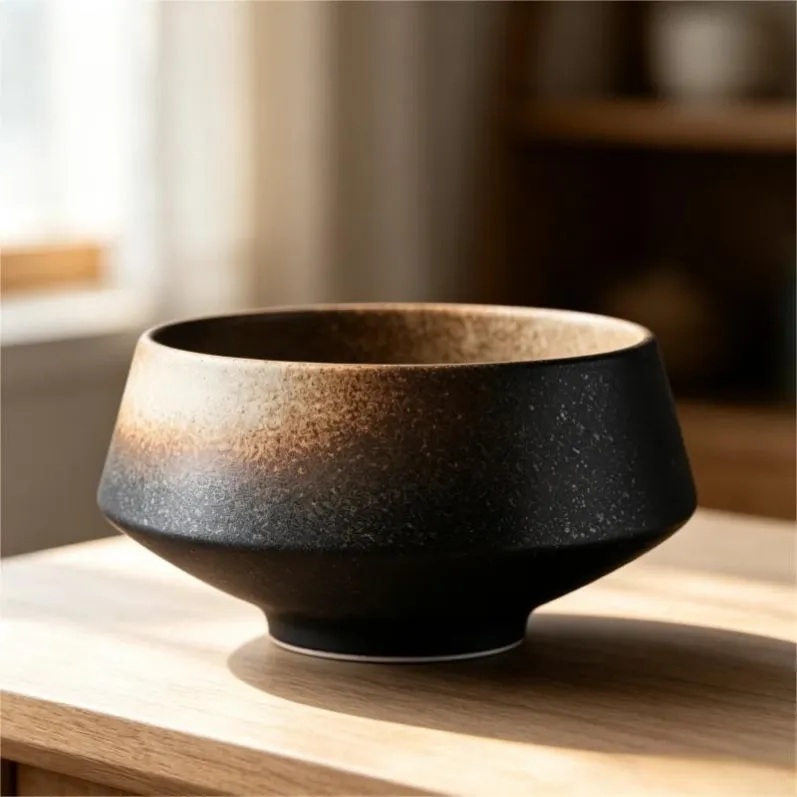
For a finer, translucent look at a higher price point, buyers usually step up to porcelain or bone china; for a rustic, hand-crafted feel, they step toward stoneware or earthenware. A good range plan often mixes two bodies: a durable high-fired line for daily use and a decorative line for seasonal sales.
How to specify ceramic in an inquiry
To get comparable quotations from ceramic factories, include these points in your inquiry:
- Body type (for example stoneware or porcelain) and firing temperature range
- Sizes, capacities and target weight per piece
- Color and glaze finish — matte, glossy or reactive glaze
- Decoration method and artwork files, if custom
- Packaging: standard corrugated box, EPE protection, or retail color box
- Required test reports for your market (EU / FDA food-contact)
- Estimated quantity per design and your target delivery window
Clear specifications reduce sampling rounds and keep bulk production consistent with the samples you approved.
Sourcing ceramic tableware from Dehua
Dehua, in Fujian, China, is known as a World Ceramic Capital, with a complete supply chain from clay preparation to export packing. Our factory is located in Chengdong Industrial Zone, Xunzhong Town, Dehua, Quanzhou, Fujian, China, and we produce ceramic dinnerware, mugs, flower vases and home decor crafts for wholesale buyers, with OEM/ODM bulk production — custom colors, sizes and packaging are available on request.
Browse our ceramic dinnerware collection or send an inquiry with your specification, and we will reply with a quotation and sampling plan.